
1. Contextual Overview: Modern TAG Heuer as a Functional Design System
Modern TAG Heuer design should be understood as a function-driven industrial system, not a purely aesthetic exercise. Its contemporary language is shaped by motorsport timing, professional chronographs, and daily-wear sport watches rather than heritage-driven ornamentation.
Key defining traits include:
- Clear information hierarchy
- Sport-oriented geometry and ergonomics
- Material-led visual logic
- Long design lifecycles with incremental refinement
These traits are particularly relevant in the replica landscape, where design stability directly influences batch consistency, visual realism, and long-term usability.
2. Case Architecture: Proportion Discipline and Industrial Geometry
2.1 Controlled Thickness and Structural Balance
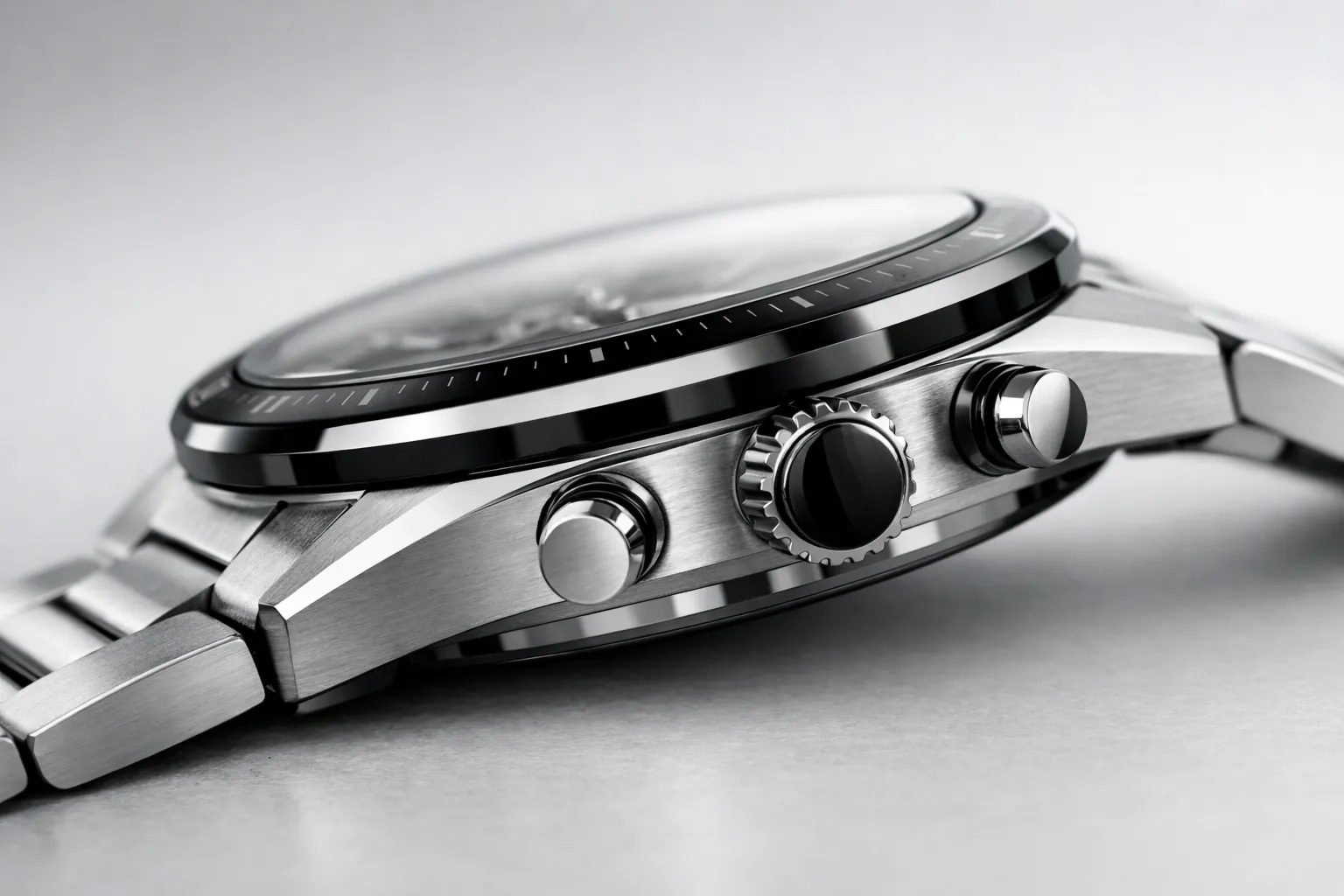
Rather than pursuing ultra-thin profiles, modern TAG Heuer cases adopt controlled thickness as a structural necessity. This accommodates chronograph modules, improves impact resistance, and enhances wrist stability during motion.
Design characteristics include:
- Clear separation between bezel, mid-case, and caseback
- Vertical mass distribution to reduce visual bulk
- Smooth side profiles that prevent slab-like appearance
This logic supports extended daily wear, especially for sport chronographs.
2.2 Lug Geometry and Wrist Integration
Recent generations emphasize:
- Shorter lug-to-lug distances
- Downward-curved lugs
- Improved articulation between case and strap
The result is a watch that wears compactly even at 42–43mm, maintaining sport presence without oversizing.
3. Dial Engineering: Information Hierarchy Over Decoration
3.1 Dial as an Interface, Not a Canvas
Modern TAG Heuer dials prioritize functional legibility:
- Primary time display remains dominant
- Complications are visually subordinated
- Symmetry and balance reduce cognitive load
This hierarchy ensures fast readability under dynamic conditions.
3.2 Contrast, Typography, and Visual Stability
Design trends favor:
- High-contrast hands and indices
- Conservative sans-serif typography
- Precise index spacing and consistent font weight
Typography is treated as a structural element, not branding embellishment. Even minor deviations in font sharpness or spacing noticeably affect perceived realism.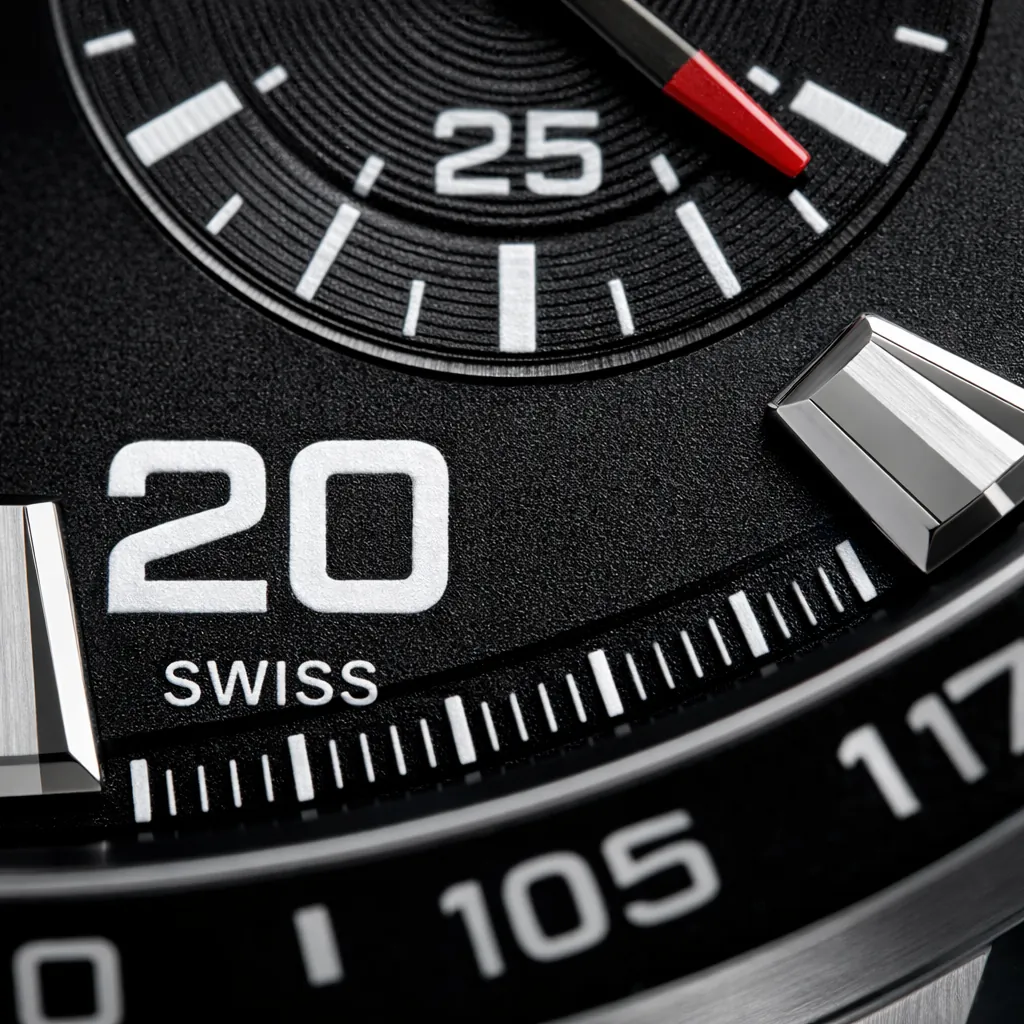
4. Functional Layout Logic: Chronograph-Centric Design
4.1 Chronograph as the Design Framework
In many modern TAG Heuer models, the chronograph is not an add-on but the organizing principle of the entire design.
This influences:
- Sub-dial symmetry
- Pusher alignment
- Dial depth and negative space control
Chronograph architecture defines both aesthetics and interaction logic.
4.2 Interaction Feedback and Usability
Pushers and crowns are designed to:
- Provide clear tactile separation
- Deliver predictable feedback
- Reinforce tool-watch identity
This aligns with TAG Heuer’s positioning as an instrument-focused brand.
5. Key Series in the Replica Landscape
Modern TAG Heuer designs translate unevenly across different series in the replica ecosystem. Certain collections benefit more from stable geometry, repeatable materials, and mature design logic.
5.1 Carrera Chronograph (Glassbox / Heuer 01 & 02 Design Language)
The Carrera Chronograph remains the most popular and fastest-evolving series in the replica market.
Current trends:
- Case proportions and glassbox curvature increasingly accurate
- Ceramic bezel brushing–polishing transitions more natural
- Dial typography noticeably sharper
- Chronograph pusher feedback clean and decisive, with improved vertical-clutch simulation feel
Historical batch issue:
Early lume batches showed greenish tone or uneven application. This has been significantly improved in later production cycles.
Community-level realism consensus:
XF > VSF / OF-line > other factories
This series benefits strongly from iterative refinement, making later batches markedly superior.
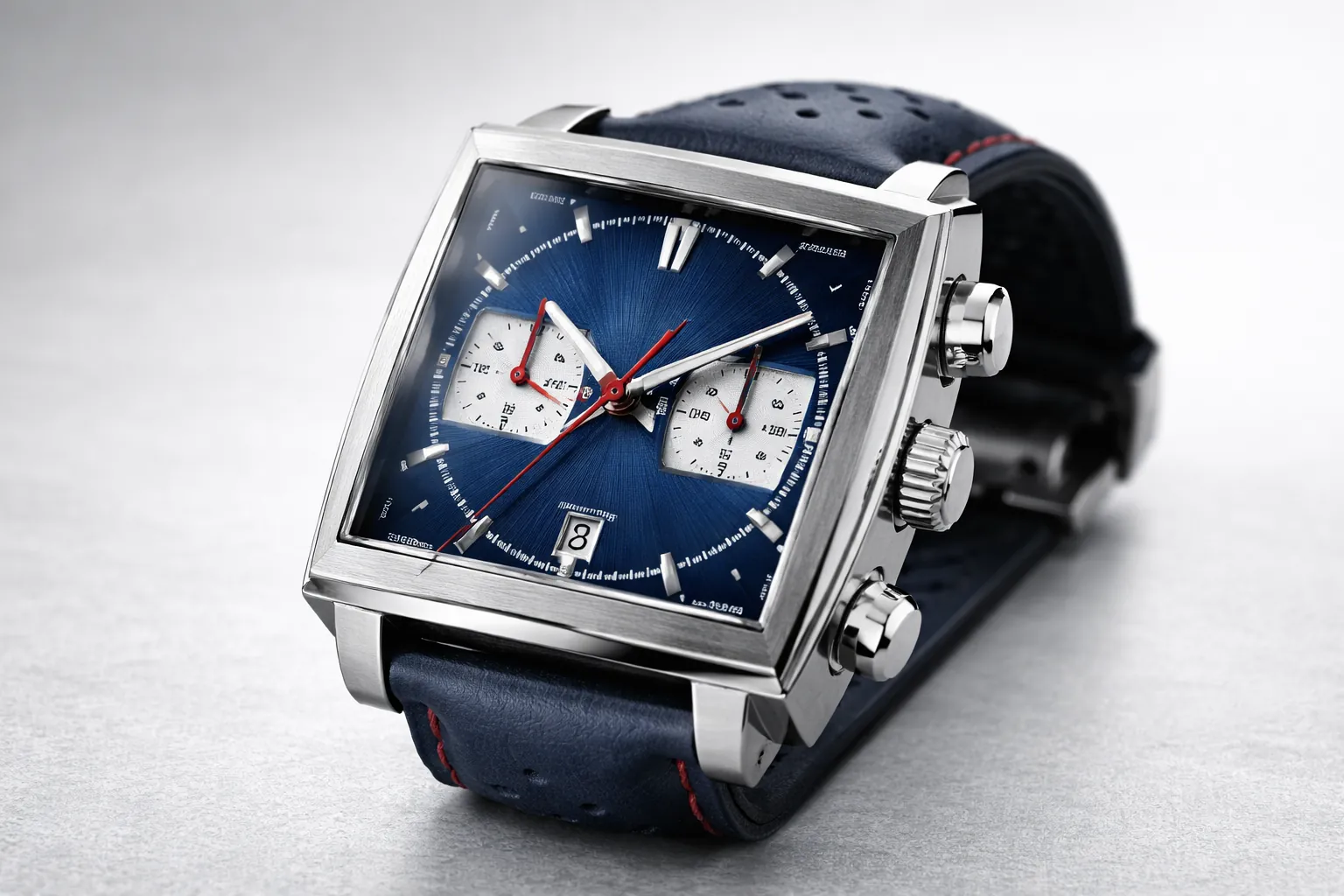
5.3 Aquaracer Professional 300
This is the most tool-oriented and mechanically stable TAG Heuer series in the replica market.
Strengths:
- Excellent ceramic bezel alignment and lume pip consistency
- Wave-pattern dials with convincing brushing depth
- Titanium versions offer realistic lightweight wear
Movement stability:
Commonly uses SW200-1 or Asian 2824 clones, typically maintaining ±10s/day.
Industry assessment:
High realism, low return rate, ideal for entry-level and long-term daily wear.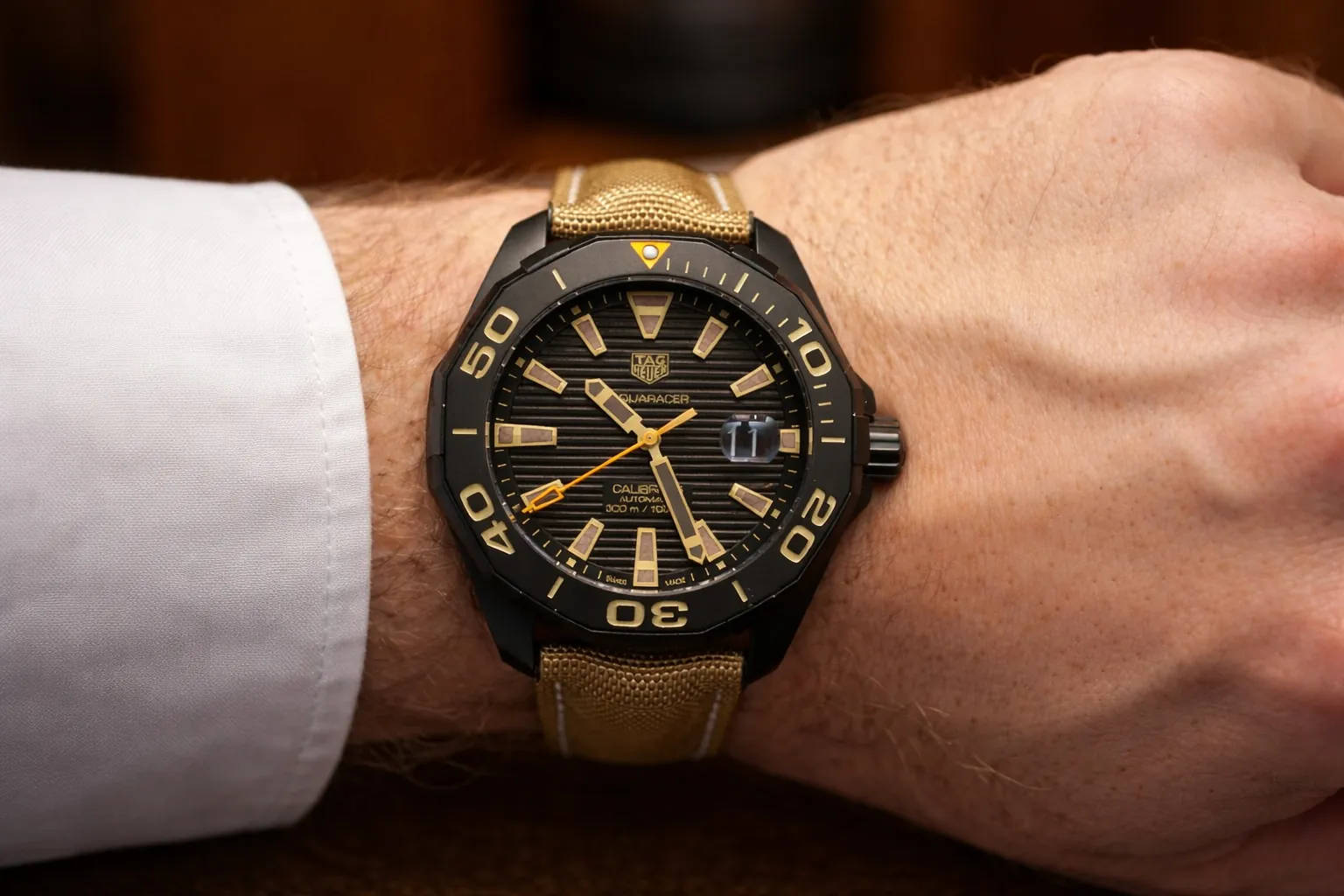
5.4 Formula 1 (Chronograph & Quartz)
Formula 1 represents the best value-oriented segment with the most expressive designs.
Trends:
- High-fidelity reproduction of racing stripes and colored bezels
- Noticeable improvement in rubber and NATO strap texture
- Quartz chronograph feedback crisp and reliable (VK / Miyota-based)
Earlier weakness:
Some early batches showed coarse case-edge polishing. Later batches have largely resolved this issue.
6. Material & Finishing Trends in Replica (2025–2026)
6.1 Core Component Evolution
| Component | Trend | Notes |
|---|---|---|
| Case & Bracelet | 316L steel + selective titanium / ceramic | Brushing–polish transitions increasingly natural |
| Ceramic Bezels | True ceramic inserts | Color saturation and engraving depth improved |
| Sapphire Crystal | AR-coated sapphire standard | Edge chamfering and clarity improved |
| Lume | Super-LumiNova–type compounds | More uniform fill, longer afterglow |
| Straps & Clasps | Rubber, steel, NATO | Quick-release systems widespread |
Later batches consistently outperform early runs, especially in lume uniformity and finishing consistency.
7. Movement & Functional Consistency Trends
Replica movement strategy increasingly favors stability over complexity.
7.1 Common Configurations
- Chronographs:
Asian 7750 / Heuer 02-style clones with column-wheel and vertical-clutch simulation feel - Three-hand + Date:
SW200 / Miyota 9015 / NH35 family — robust, stable, predictable - Quartz:
Miyota / VK series — high accuracy, ideal for Formula 1 lightweight use
7.2 User-Experience Improvements
- Smoother winding resistance
- Cleaner time-setting clicks
- More decisive chronograph reset
Power reserve typically falls in the 38–50 hour range, suitable for daily wear rotation.
8. Aesthetic & Batch Authenticity Trends
The most visible areas of improvement across recent TAG Heuer replicas include:
- Sharper font edges and even index spacing
- Natural metallic sheen on bezel numerals
- Softer, more realistic hand-polish reflections
- Consistent chamfer light bands on case edges
- Smooth light transitions without flat or “jumping” reflections
These refinements significantly improve real-life wrist presence, not just macro photography appeal.
9. Industry-Level Interpretation
From an industry perspective, modern TAG Heuer designs succeed in the replica landscape because they are:
- Functionally logical
- Proportionally disciplined
- Less dependent on fragile decorative techniques
Designs built on clarity and structure are inherently more reproducible and stable across batches.
Professional Summary
Modern TAG Heuer design trends emphasize functional clarity, ergonomic proportion, and material realism. In the replica landscape, series such as Carrera, Aquaracer, Monaco, and Formula 1 demonstrate how stable industrial design enables measurable improvements in realism, usability, and long-term consistency.
