
What Affects Watch Accuracy? Magnetism, Shock, Temperature, Gravity, and Daily Habits Explained
A neutral, real-world guide to why mechanical watches drift—covering magnetism, impacts, temperature swings, positional variance, humidity, and wearer behavior—without laboratory assumptions or sales framing.Introduction
Watch accuracy is one of the most discussed topics among mechanical watch enthusiasts and everyday wearers alike. While specifications often suggest a fixed tolerance, real-world performance tells a more complex story.
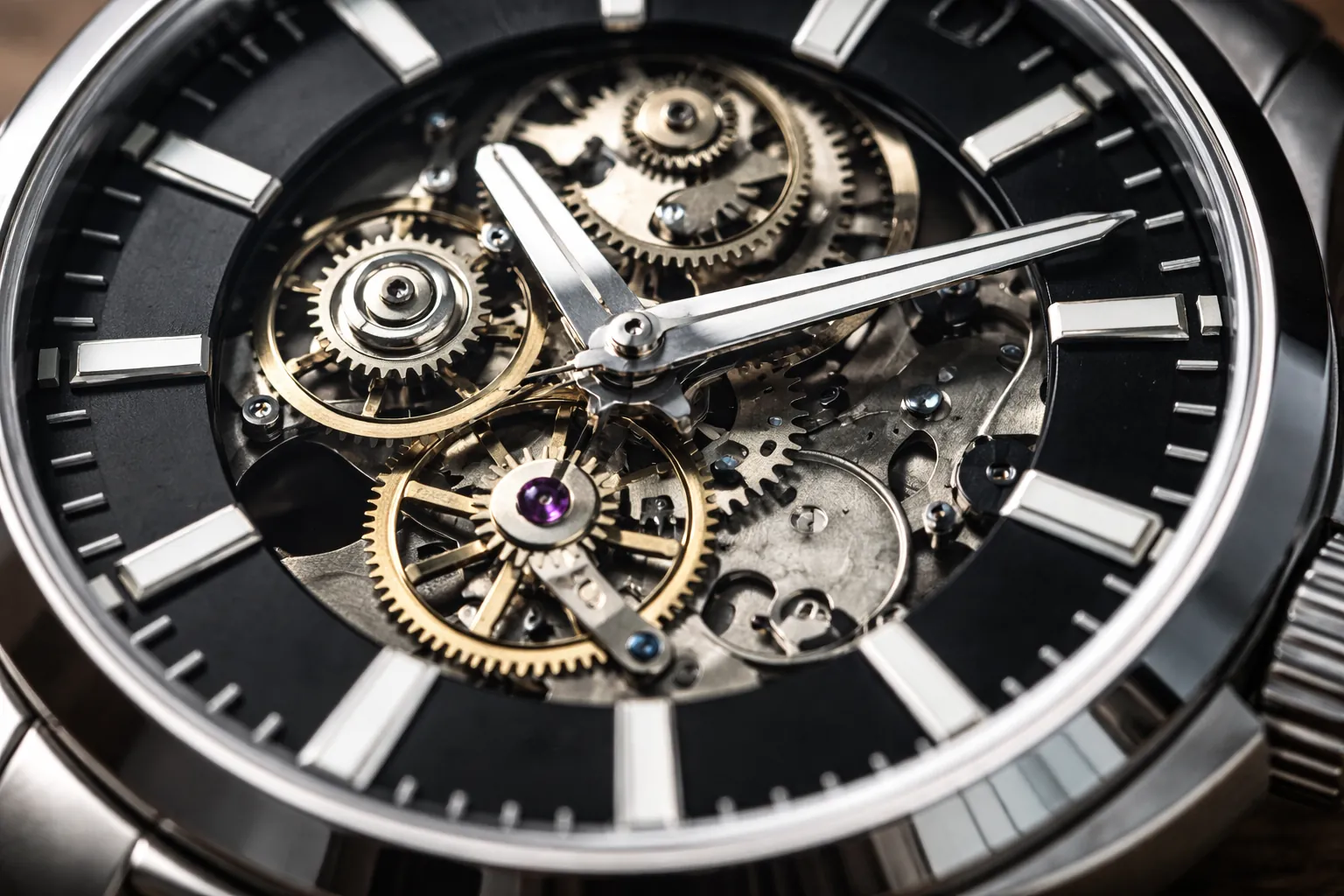
Mechanical watches rely on a finely balanced system of components—such as the balance wheel, hairspring, and escapement—to keep time. These parts are precise, but not isolated. Their performance is continuously shaped by environment, motion, and user behavior. Understanding what affects watch accuracy helps wearers interpret timing variations correctly and manage expectations through informed use and care.
How Watch Accuracy Works: Fundamentals and Industry Standards
Mechanical watch accuracy is determined by the stability of the movement’s oscillation frequency. Common modern movements operate at:
- 28,800 vibrations per hour (4 Hz)
- 21,600 vibrations per hour (3 Hz)
In practice, this frequency is never perfectly constant.
Commonly Accepted Accuracy Ranges
- Standard mechanical watches: approximately −10 to +20 seconds per day
- COSC-certified chronometers: −4 to +6 seconds per day (under controlled test conditions)
It is important to note that COSC testing occurs in fixed positions, stable temperatures, and shock-free environments. Daily wear introduces variables that naturally widen real-world deviation. As a result, short-term fluctuations are not inherently signs of mechanical issues.
From an industry perspective, long-term consistency matters more than achieving a perfect daily number.
Magnetism: The Most Common Real-World Disruptor
Among all factors discussed when asking what affects watch accuracy, magnetism is one of the most frequent causes of sudden deviation.
Why Magnetism Matters
Mechanical movements still contain ferromagnetic components, especially the hairspring. Exposure to magnetic fields can cause the hairspring to partially stick or deform, shortening its effective length and increasing oscillation speed. The most common outcome is a watch running noticeably fast.
Everyday Sources of Magnetic Fields
- Smartphones and tablets
- Laptop speakers and chargers
- Magnetic clasps on bags or watch boxes
- Medical equipment such as MRI machines
Many everyday electronic devices generate magnetic fields far exceeding 60 gauss, enough to affect traditional movements after brief exposure.
Industry Context
- Modern silicon hairsprings significantly improve anti-magnetic resistance
- Anti-magnetic does not mean immune
- Demagnetization is a routine service procedure, not a repair
Shock and Vibration: Cumulative Mechanical Stress
Shock does not always cause immediate damage, but repeated impacts and vibration can gradually disrupt movement alignment.
How Shock Affects Accuracy
- Microscopic shifts in the balance staff
- Increased friction at jewel bearings
- Minor displacement within the escapement system
Even with shock protection systems (such as Incabloc), tolerance limits exist.
Common High-Risk Scenarios
- Running, basketball, golf
- Motorcycling or heavy machinery operation
- Accidental knocks against hard surfaces
Industry experience shows that prolonged exposure to vibration often leads to reduced timing stability over time rather than instant failure.
Temperature Changes: A Subtle but Powerful Variable
Temperature is an often underestimated factor influencing accuracy.
Why Temperature Matters
- Metals expand and contract
- Lubricants change viscosity
- Oscillation frequency shifts subtly
Industry consensus suggests that a 10°C (18°F) temperature change may alter accuracy by 5–10 seconds per day.
Real-Life Examples
- Direct sunlight in summer
- Cold outdoor conditions followed by warm interiors
- Hot showers or sauna environments
Even movements using temperature-compensating alloys cannot fully eliminate these effects.
Gravity and Positional Variation (Positional Error)
Gravity influences mechanical watches differently depending on orientation, a phenomenon known as positional variance.
Industry Observations
- Differences of 10–20 seconds per day across positions are common
- Vertical positions typically show greater deviation
- Horizontal positions tend to be more stable
Complications such as tourbillons aim to average gravitational effects, but most watches rely on multi-position regulation instead.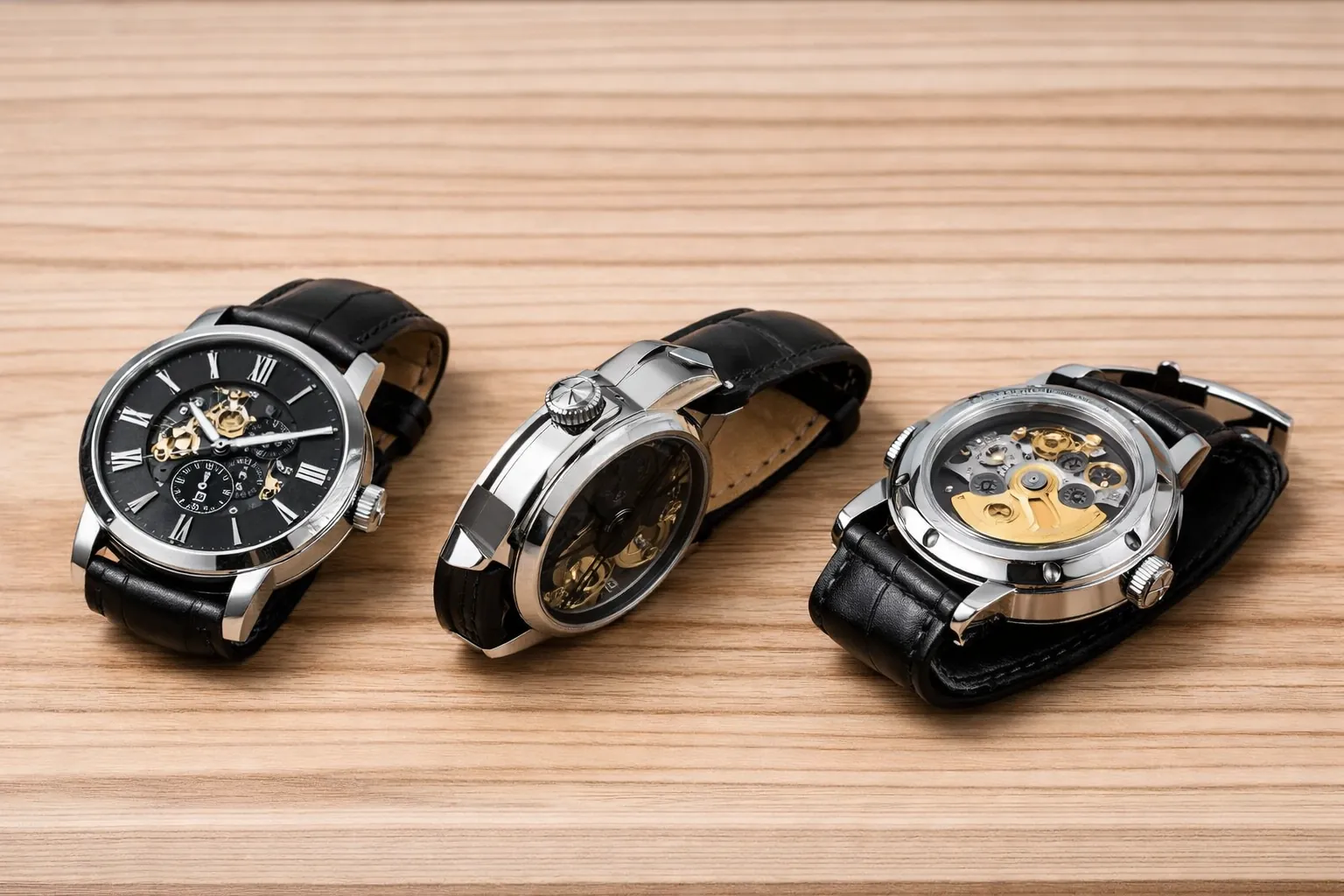
Practical Management
- Avoid storing the watch in a single position for long periods
- Night storage dial-up often minimizes deviation
- Focus on weekly trends rather than daily snapshots
Humidity, Dust, and Environmental Degradation
Humidity does not directly change timing but affects accuracy indirectly through long-term degradation.
Common Consequences
- Lubricant breakdown
- Oxidation of components
- Increased friction
In regions with consistently high humidity, accuracy degradation tends to appear gradually over months rather than immediately.
Even water-resistant watches rely on aging gaskets, making periodic inspection essential.
Daily Wearing Habits: The Most User-Controlled Factor
Mechanical watches are designed to be worn regularly, not stored indefinitely.
Movement Aging and Maintenance Cycles
Over time, lubricants dry, friction increases, and tolerances widen. These changes gradually influence accuracy even under ideal conditions.
Industry Maintenance Consensus
- Full service every 3–5 years
- Gradual deviation is normal
- Sudden or extreme changes deserve attention
Neglecting routine maintenance has a greater long-term impact than most single environmental factors.
How to Minimize Accuracy Variations in Practice
Rather than chasing absolute precision, experienced wearers focus on reducing volatility.
Practical, Industry-Aligned Strategies
- Keep watches away from strong magnetic sources
- Avoid repeated high-impact activities while wearing
- Monitor accuracy trends rather than daily figures
- Follow realistic service intervals
- Choose movements aligned with lifestyle demands
Conclusion: Accuracy Is a System Outcome, Not a Fixed Number
Mechanical watches are not static instruments. Their accuracy reflects a dynamic interaction between engineering, environment, and user behavior.
Understanding what affects watch accuracy allows wearers to interpret performance intelligently, manage expectations realistically, and enjoy long-term reliability rather than chasing unrealistic perfection.
